Month: September 2014

End of Summer: Basil Pesto

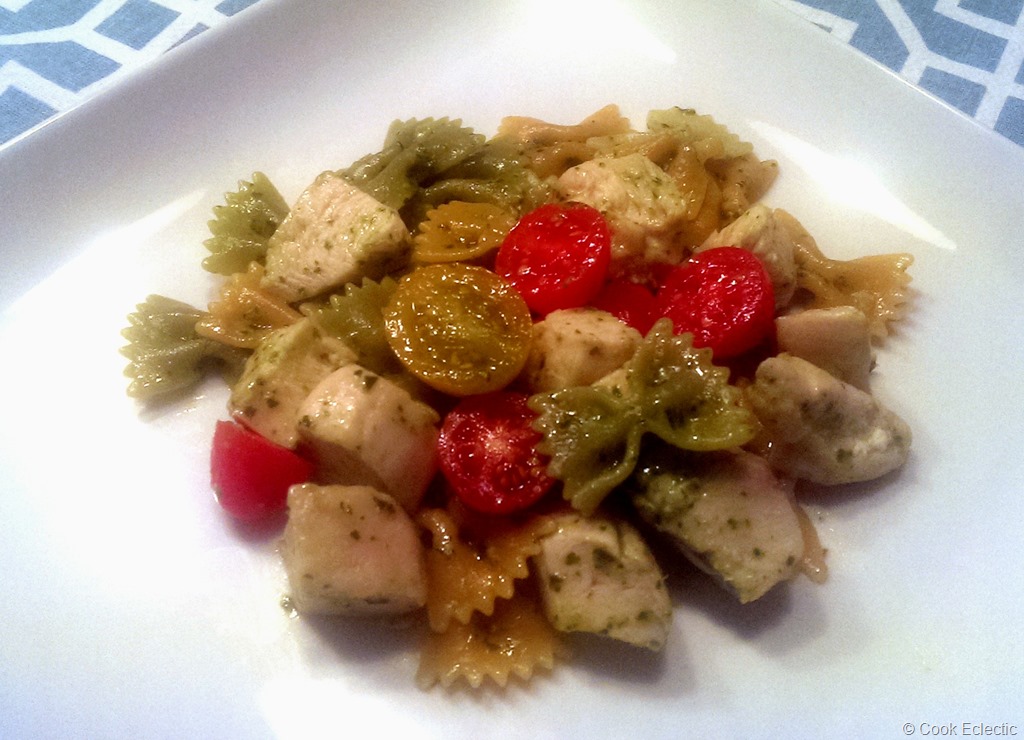
pesto pasta with chicken and tomatoes

As summer comes to an end, I am wishing a tearful farewell to my basil plants. This year I didn’t plant a full summer garden, since we’re in the middle of the worst drought California has seen since they started measuring these things. But I did plant basil in a pot, because otherwise what was I supposed to eat with the tomatoes I swiped from my mom’s garden and/or got from the roadside stand? And sure, you can buy basil at the store, but, basil being a delicate herb, Safeway apparently feels justified in charging exorbitant prices for just a few sprigs. So, in the end, I declared basil worth the water I spent on it.
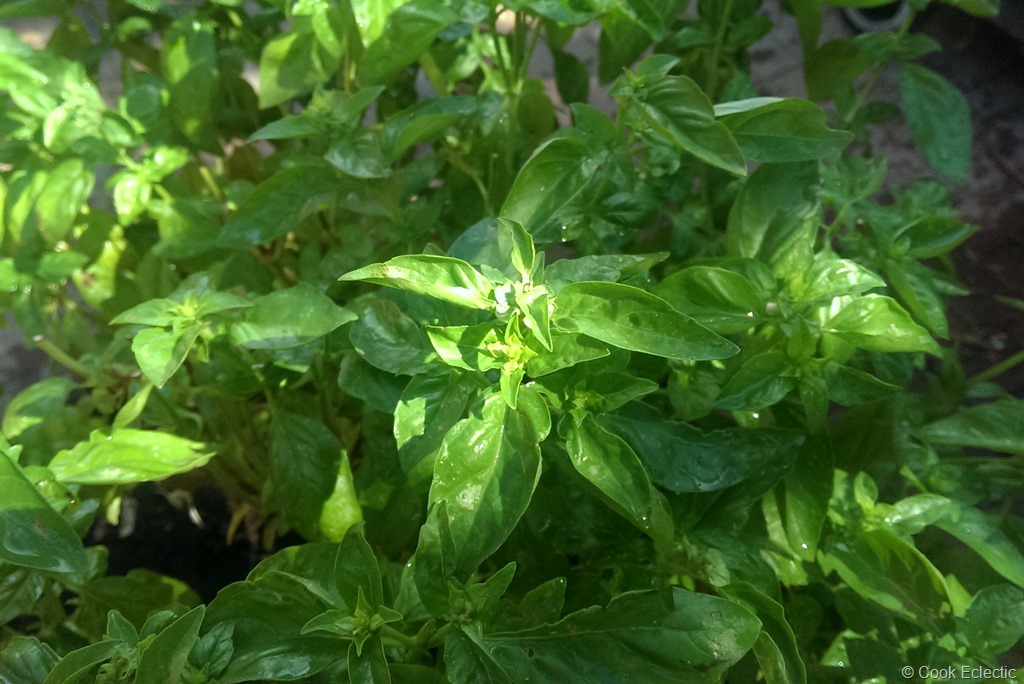
basil plants

Worth it.

Now, though, as we near the end of September, my basil plants try to flower every time I turn my back on them and soon cold weather will send them to the big herb garden in the sky. It’s time to preserve one of my favorite summer flavors for the dark winter months. And what better way to preserve basil than pesto? It freezes beautifully and, as a bonus, can be used to make a weeknight dinner that’s ready in the time it takes to boil pasta.

I actually mowed down my basil to make pesto more than once this summer, since I live in the sort of hot, dry climate that makes the plants grow like gangbusters. But you obviously don’t need to make pesto on the same massive scale I do! My recipe is based on Marcella Hazan, the Julia Child of Italian cuisine. I have only slightly bumped up the garlic from the original. As written, the recipe makes enough pesto for one pound of pasta (about half a cup), but if you have a standard large food processor a double batch will fit perfectly in the bowl (pictured).
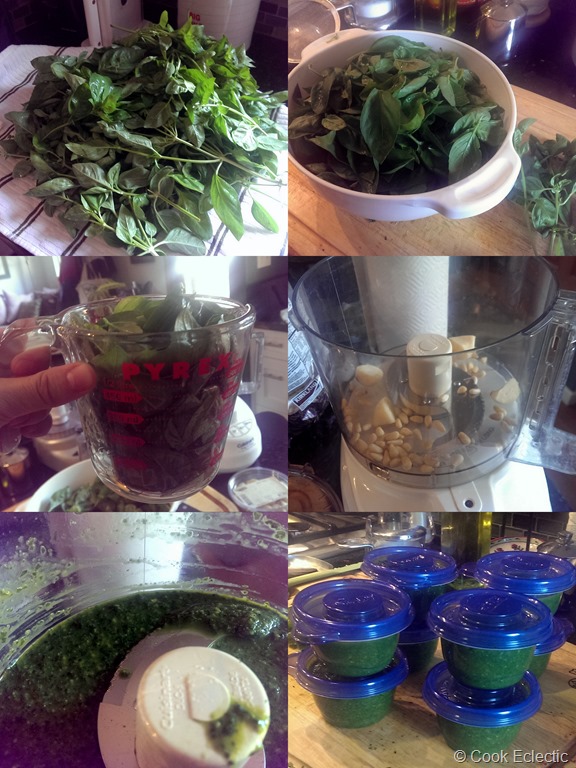
making pesto

The pestofication of my basil harvest.

If you have an Italian grandmother or watch a lot of food TV, then you may know that real Italians would never dream of making pesto in a food processor. For true authenticity, you will need a giant mortar and pestle. In case you are wondering, yes, I do have that mortar I just linked to, and yes, I did make pesto in it once, and no, I do not plan to do that again.

Finally, if you have never made your own pesto before, be warned: fresh pesto has a very herby, bright, almost grassy flavor. Honestly, I’m not a huge fan of it fresh from the food processor. But the grassy flavor mellows over time and adding the sauce directly to hot pasta will cook the ingredients slightly, further removing any sharp, “raw” flavors. Trust me—it will be delicious. Now go make some before the basil is gone!

Side note about pine nuts: they will last forever in the freezer, so save yourself a lot of money by buying the giant bag from Costco and freezing it. You can also substitute walnuts if you can’t find pine nuts.

Basil Pesto

Makes about 1/2 C (4 oz), enough for 1 pound of pasta

Ingredients

1 C basil leaves, packed
1 TB pine nuts
2 cloves garlic
1/4 C extra virgin olive oil
salt to taste
1/4 C grated parmesan

Directions

If using right away: pulse all ingredients in a food processor until it is a fairly uniform paste. Or, if you want to be very Italian about it, mash them with a big mortar and pestle.

If freezing: combine all ingredients except the parmesan as above. Freeze. Add the parmesan when using.

Pesto pasta with chicken and cherry tomatoes

Ingredients

1 lb small pasta (I used bowtie)
1/2 C (one recipe) pesto, thawed if necessary
1/4 C parmesan, if using thawed pesto, plus more for garnish
1 lb boneless, skinless chicken breasts or thighs
1 pint cherry or plum tomatoes, halved

Directions

  1. Boil a large pot of well-salted water for the pasta.
  2. While you are waiting for the water to boil, pre-cook your chicken. I sometimes poach it in a bit of chicken broth, but this time I used this method from the Kitchn. Either way works well!
  3. Begin cooking your pasta so that it will finish a few minutes after the chicken has finished cooking.
  4. Slice your tomatoes and grate your parmesan.
  5. Dice the cooked chicken into bite-size pieces.
  6. When the pasta is done, drain and put back into the large pot. Add the pesto and mix, then add the parmesan (if not already in the pesto) and diced chicken and mix well. Check seasoning. Finally, add the tomatoes and carefully mix.
  7. Serve topped with additional parmesan.
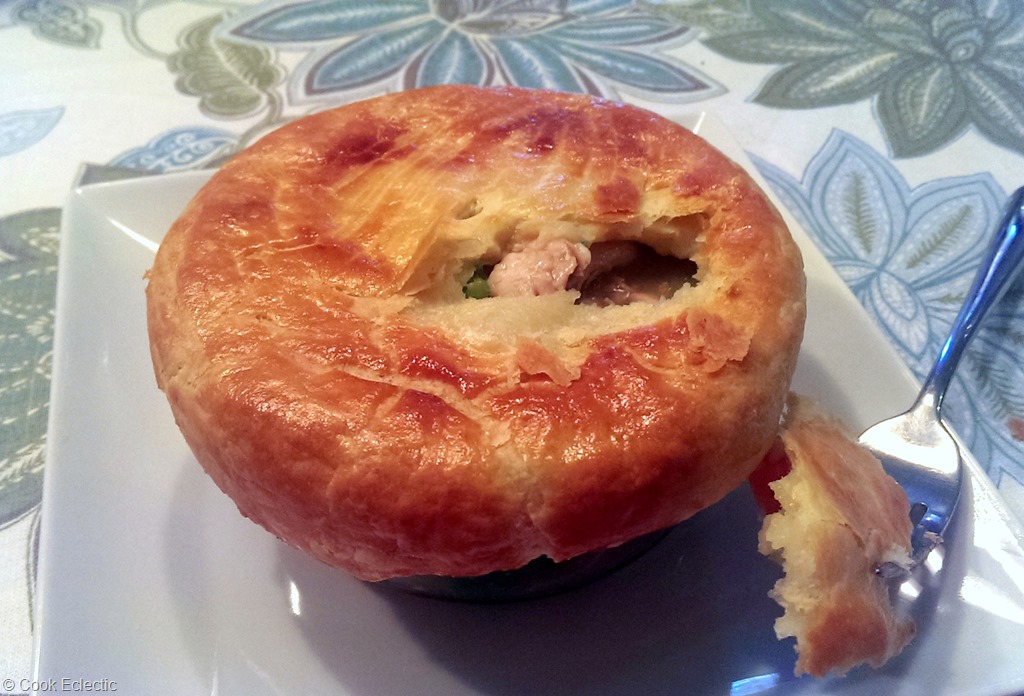
Chicken Pot Pies

chicken pot pie

I’ll start with the good news: these pot pies have a rich, buttery crust and a silky, decadent filling. After eating one, you’ll never be able to look the same way at one of those frozen Marie Callender’s pot pies again. Plus, since this recipe has carrots and peas in it, it must be healthy, right? I’ll just keep telling myself that, especially now that saturated fat isn’t bad for you anymore.

What’s that? You still want the bad news? Let me put it this way… How much does the person who does the dishes in your household love you? How much do they love pot pies? Because this recipe uses ALL THE DISHES. And the countertops. It also takes a whole afternoon to cook, and may take just as long to clean up after. However—and this is key— you do get rewarded with the joy of eating amazing chicken pot pies.

You can do your own cost/benefit analysis, but, needless to say, I end up making these every couple months when I have a free weekend afternoon.

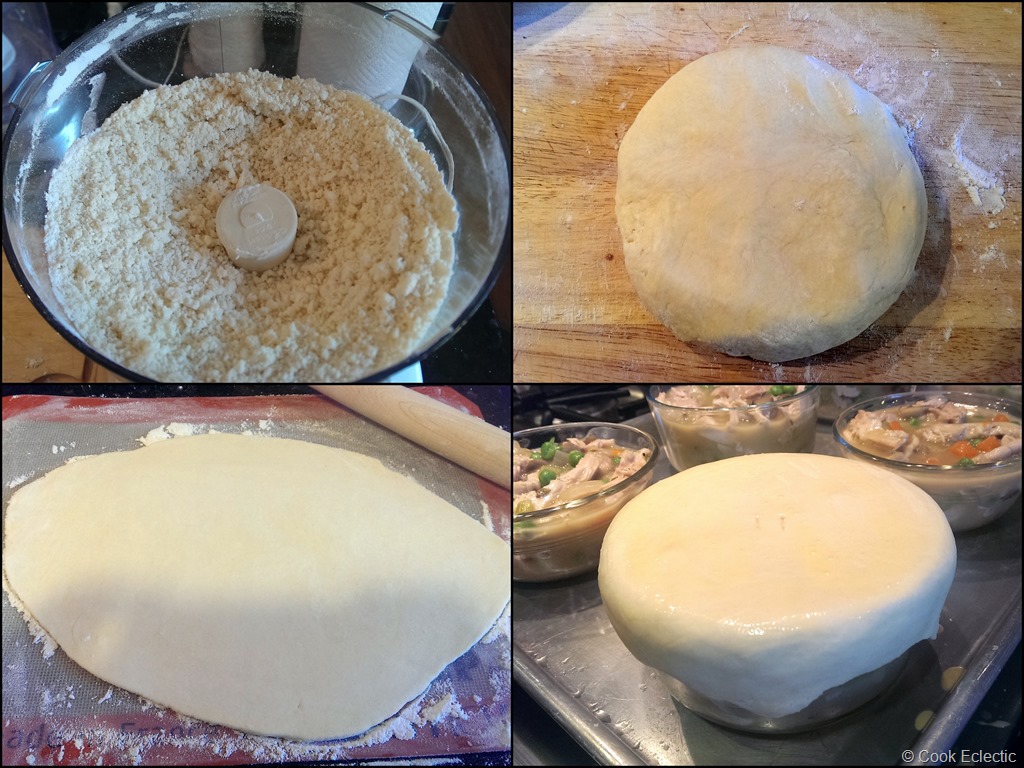
Everyone knows that the crust is the best part of a pot pie (or any pie really). What I like about the crust on these pies is that it isn’t as finicky as some pastry crusts. There’s no “knead—but don’t heat up the dough with your warm fingers you careless warm-blooded mammal” step in the instructions, which is where I invariably mess up most crusts. I’m not much of a baker and I have never managed to screw this dough up.

dough preparation

Clockwise from top left: the “parmesan” stage, dough ready for the fridge, rolled out dough, a topped pie

The filling is basically chicken soup, but the broth has been turned into gravy, because gravy makes everything better (other foods on that list: avocado, bacon, and Sriracha). If you have homemade chicken stock, this is a good time to pull it out. Poaching the chicken in the stock adds even more chicken-y goodness to the end product, but, after trying it once, I did cut out the skinning and deboning of whole chicken quarters recommended in the original recipe because it was a huge PITA and I don’t think it actually added anything, flavor-wise. My recipe has a high chicken-to-veggie ratio, so feel free to adjust to your personal preferences.

baked pies

Before and after

Enjoy!

Chicken pot pies

Loosely based on this recipe from Anne Burrell
Active time: 2 hours; Inactive time: 30 minutes; Total time: 2.5 hours; Servings: 6

Ingredients

For the crust:
1 stick (1/4 lb.) cold butter, cut in small pieces
8 oz. cold cream cheese, cut into small pieces
1 1/2 C all-purpose flour (plus extra for kneading)
Pinch of salt
1 egg yolk
1-2 TB cold water
For the filling:
4 cups chicken stock
3 lbs. boneless, skinless chicken thighs
Vegetable oil
1 large onion, chopped
2 ribs celery, chopped
3 carrots, peeled and chopped
4 cloves garlic, minced
8 oz mushrooms, sliced
1 bunch thyme, tied in a bundle
6 sage leaves, minced
8 oz frozen peas, thawed and drained
4 TB butter
4 TB all-purpose flour
1 egg beaten with 2 TB water (for egg wash)

Directions

For the crust (can be done one day ahead):

  1. Combine the butter, cream cheese, flour, and salt in the bowl of a large food processor.
  2. Pulse to combine until the dough looks like grated parmesan.
  3. Add the egg yolk and 1 TB of the water and pulse until the dough starts to form a ball. If it doesn’t come together, add the second TB of water.
  4. When it has formed a ball, dump it onto a floured surface and knead a couple times.
  5. Form the dough into a disk, dust with flour, and wrap in plastic wrap.
  6. Refrigerate until 20 minutes before ready to use.

For the filling:

  1. Pour about 2 cups of chicken stock into a large saute pan with a lid. Place all the chicken in a single layer in the pan (it does not need to be submerged), sprinkle with salt, and cover. Bring the stock to a medium-low simmer and cook the chicken about 20 minutes—until cooked through. While you’re waiting, chop your veggies.
  2. When the chicken is almost finished cooking, coat the bottom of a large pot with oil and saute the onions, celery, and carrots with a pinch of salt for about five minutes. Add the garlic and saute a minute more, then add the mushrooms and saute for another five minutes until they have given up their moisture.
  3. Remove the chicken from the stock and set aside to cool. Reserve the stock.
  4. Add the reserved stock from the chicken and the remaining two cups of stock to the pot with the veggies along with the sage and bunch of thyme. Check for seasoning and add salt as necessary. Bring to a boil then reduce to a simmer and simmer for about 15 minutes, until the veggies are cooked through and the thyme has fallen from the stems.
  5. Meanwhile, shred the cooled chicken and put in a large bowl.
  6. Remove the veggies from stock with a slotted spoon and add to the bowl with the chicken. Discard the thyme stems. Add the thawed peas to the bowl as well and mix thoroughly. Reserve the stock.
  7. In a second large pot, melt the 4 TB butter over medium heat, then add the flour and stir. Stir constantly until the roux begins to turn beige, about 5 minutes.
  8. Gradually stir or whisk in the (now veggie-free) stock. Stir briskly to prevent lumps. When all the stock has been added, bring the mixture to a boil then reduce to a simmer. Check the seasoning. Simmer about 20 minutes, until it is thick like gravy.
  9. While the gravy is simmering, take the dough for the crust out of the fridge and preheat the oven to 375 degrees.
  10. Split the filling into 6 two-cup, oven-proof dishes (I have these Pyrex ones).
  11. When the gravy is ready, spoon it over the filling, leaving a bit of space at the top of the dish.
  12. Dust a clean work surface with flour and roll out your dough until it is about 1/4” thick. Cut out circles large enough to cover your dishes with a generous overhang. This dough is forgiving— if you need to gather together the scraps and reroll the dough to cover some of your pies there won’t be a noticeable texture difference.
  13. Brush the sides of each dish with the egg wash (it acts as a glue) and place the dough over the top, gently pressing down the sides.
  14. Pierce the center of the dough on each dish a couple times with a sharp knife to vent, then brush the tops with the egg wash (to increase browning).
  15. Place all the pies onto a sturdy sheet pan, then bake in the 375 degree oven for 30 minutes, until nicely browned.
  16. Eat your pies! Leftovers are excellent, though the crust is less crispy the next day.